You've done the appointments. You've done the exercises. You've tried to be patient. Maybe you even felt a little better for a while.
So why are you still hurting?
If you've tried physical therapy, chiropractic, massage, stretching, rest, or other common treatments for low back pain, neck pain, sciatica, or other muscle, joint, and nerve pain, it can feel maddening when the pain either never fully goes away or keeps coming back.
You start wondering if you're missing something, if your body is just broken, or if this is simply what life is going to feel like now.
A lot of people are not failing because their body is broken. They're stuck because the care they received never got specific enough.
If you've done "all the right things" and you're still in pain, there's usually a reason — and it's not that your body is broken. In this post, I'm going to show you why past treatments may not have worked, what they may have missed, and what it actually takes to create lasting progress. If you're tired of temporary relief and want real answers, this is for you.
Let's dig in.
Problem 1: More treatment does not always mean the right treatment
One of the biggest mistakes people make is assuming that because they have already tried a lot of treatment, nothing else will work.
That is a very understandable conclusion. After all, if you've already done PT, chiropractic, massage, stretching, rest, injections, or other forms of care, it can feel like you've checked every box.
But here's the uncomfortable truth:
More treatment does not always mean better treatment. And a lot of people are not being failed by their body. They're being failed by generic rehab, rushed visits, and treatment plans that never evolve.
This is where what I call PT Mills and Chiro Farms come in.
A Chiro Farm often looks like this: you get X-rays, someone fear-mongers you into believing your spine looks ancient, then you're pitched a long-term treatment package on the spot. Three visits a week for three months. Bonus savings if you pay up front today.
Then every visit looks basically the same, whether you're clearly improving, plateauing, or giving feedback that it isn't sticking.
Eventually, the patient asks the right question:
"How do I make the adjustment stick?" — Because if the answer is just, "Keep coming back forever for the same thing," that's not a plan. That's dependency dressed up as care.
A PT Mill can look different, but often ends in the same place. You get a handful of basic strengthening exercises you could have found online, you're mostly babysat by a tech checking boxes while you do sets and reps, and eventually you're told you're "done" because insurance says you're out of visits — whether you're actually better or not.
That kind of care can absolutely help some people in the short term. But it often misses the bigger picture:
- What is actually driving this person's pain?
- What behaviors or loads keep stirring it up?
- What needs to change to make improvement last?
The hand will never heal if it keeps going back on the hot stove. The same is true with pain. If the underlying behaviors, loads, movement habits, or aggravating patterns never change, temporary relief is usually all you get.
That is why one of the most important questions to ask is not:
"Have I tried treatment?"
It is:
"Was that treatment actually specific to me?"
The right care usually starts with a clear assessment. It looks at what makes your symptoms better, worse, and more predictable. It considers what you've already tried, what helped, what didn't, and what may have been missed.
One of the most common things we hear in the clinic is some version of, "No one ever really explained why this kept coming back." That matters more than people realize.
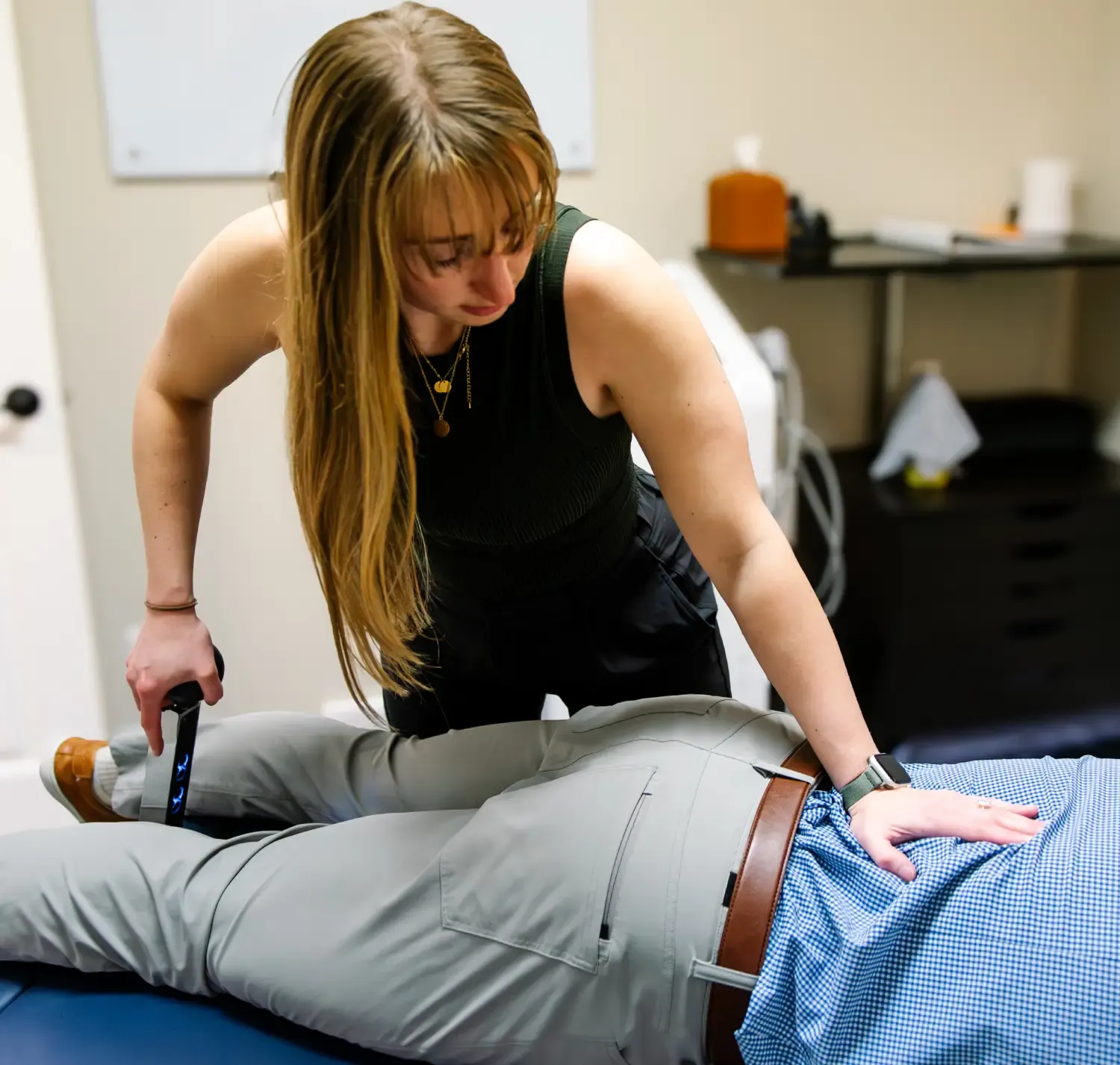
At REACH, this is exactly how we approach care. We start with a thorough evaluation so we can understand how your condition behaves, what your past treatment experiences were like, and what may have been overlooked. From there, we build a plan that fits your body, your goals, and your response instead of handing you a one-size-fits-all solution.
Problem 2: Feeling better is not the same as getting better
This is another big reason people stay stuck: pain relief is not always the same thing as recovery.
A lot of treatments can help calm symptoms down for a little while. That's not a bad thing. Reducing pain matters.
But here's the key distinction:
Feeling better is not the same as getting better. Pain can calm down before your body is truly ready for the things that usually flare it up.
That is where many people get trapped in the cycle of temporary relief. They feel better for a short time, go back to sitting, working out, lifting, driving, or keeping up with family life, and then the pain returns.
It starts to feel like they are always managing the same issue instead of actually moving past it.
Real improvement usually means more than just lowering pain. It means rebuilding the physical qualities your body needs to handle life again. That may include better movement quality, more strength, more control, better tolerance to activity, and more confidence in how your body moves.
At REACH, this is where our care often moves through phases:
- Relieve Relieve what is irritated and calm things down
- Restore Restore what is missing in mobility, control, strength, or movement quality
- Reinforce Reinforce those changes so your body can actually keep them under real-life stress
That middle and last part are where a lot of people get shortchanged.
We also help people build what I often call postural hygiene, or body hygiene — simple daily movement and body-care habits that help support the spine and body between visits and long after treatment ends.
The goal is not to keep you tied to care forever. The goal is to help you get better, stay better, and know what to do if your body starts talking to you again.
Problem 3: The right plan should fit your body — not force you into a template
Even when someone gets a decent diagnosis and some helpful treatment, they can still stay stuck if the plan itself is too generic.
A lot of people have been given programs that were basic, templated, or barely adjusted over time. They were told to stretch this, strengthen that, and repeat the same routine no matter how their symptoms changed.
But recovery rarely works that way.
If everyone gets the same handout, the same 8-minute visit, and the same recycled advice, that's not personalized care. That's a template with your name stapled to it.
The most effective plan is usually one that is:
- Specific — based on a clear assessment of what seems to matter most in your case
- Progressive — changes over time as your body improves and can handle more
- Responsive — adjusts based on your symptoms, your wins, your setbacks, and the real-life activities you are trying to return to
That last part matters a lot. A good plan should be tied to what you actually want to get back to doing.
Maybe that's lifting without fear. Maybe it's getting through the workday without your back tightening up. Maybe it's sitting through a long drive, working out consistently, or playing with your kids without worrying about the next flare-up.
Recovery is rarely about doing a bunch of different things. It's about consistently doing the right, simple things at the right time and adjusting them as your body changes.
Recovery is rarely about doing a bunch of different things. It's about consistently doing the right, simple things at the right time — and adjusting them as your body changes. It should not feel like rehab became your second job. It should feel doable, clear, and connected to your goals.
At REACH, this is one of the core parts of how we work. We assess thoroughly, identify what seems to matter most, and create a treatment and rehab plan that is targeted and simple.
You might be wondering: "Okay, but how do I know this won't just be more of the same?"
Fair question.
If you've already tried multiple treatments, it makes complete sense to feel skeptical. You may feel discouraged, hesitant, or just tired of putting more time, money, and hope into something that might not work.
And to be clear: I'm not saying we have magic hands or some secret exercise list.
The difference is not that we'll do "more stuff."
The difference is that we'll try to understand the problem more specifically and build a plan that actually changes with you.
At REACH, we do not just look at where it hurts. We look closely at what you've already tried, how your body responded, what patterns are showing up, and what you actually need to get back to doing.
Then we use targeted treatment and progressive rehab to build a plan that is individualized, goal-oriented, and designed for lasting results — not just short-term relief.
Just as important, we help you understand your condition and how to take care of yourself moving forward. That way, you are not just getting help in the moment. You are learning how to prevent future flare-ups and stay active in the things you love.
The Bottom Line
If you've tried a lot and you're still in pain, I hope this helped you see that you're not broken — and you're not out of options.
A lot of people stay stuck for three main reasons:
- They've had more treatment, but not better treatment
- They've had symptom relief, but not true recovery
- They've never had a plan built specifically for their body, goals, and response
The issue is often not that you have not tried enough. It is that no one has helped you connect the right plan to the right problem — and carry it far enough to make the changes stick.
Often, the missing piece is not more treatment. It is better treatment, a better plan, and a better understanding of what your body actually needs to move forward.
When you start approaching things this way, it becomes possible to stop repeating the same frustrating cycle, trust your body more, and get back to the things you love with more clarity, confidence, and momentum.
Ready for a different kind of care?
If this post helped you realize that your body is probably not broken — and that the real issue may be that you've had more treatment, but not better treatment — then here's what I recommend next.
Book an evaluation at REACH.
This is the step where we stop guessing.
At your evaluation, we'll look at:
- how you move and what hurts
- what you've already tried
- what helped, what didn't, and what never really made sense
- how your symptoms behave
- what your body responds to
- and what may need to change so you can stop repeating the same cycle
From there, we'll help you build a plan that is more specific, more responsive, and more connected to what you actually want to get back to doing.
That may mean reducing or resetting what's irritated first. Then restoring what's missing. Then reinforcing those changes so they actually hold up in real life.
In other words: not more random treatment. Not more Chiro Farm or PT Mill nonsense. A clearer strategy.
If you're tired of short-term relief, recycled advice, and wondering why nothing seems to stick, this is the next best step.
We've helped a lot of people in the same exact spot you may be in now — frustrated, skeptical, and tired of treatments that never really stuck — and our 400+ 5-star Google reviews reflect that experience.
Call or text (734) 530-9134 · Plymouth, MI · Same-week appointments available