Why We Do Hands-On Work at All
When something hurts, your body tends to protect it.
Muscles tighten. Movement gets guarded. Things that normally feel easy suddenly don’t. Sometimes that protection is useful. Sometimes the original irritation has settled down, but your body hasn’t gotten the memo yet.
That’s where hands-on treatment can help.
Soft tissue work can decrease sensitivity and muscle tension enough to make movement more comfortable. We’re not trying to magically “fix” a muscle with our hands. We’re trying to create a window where you can move better, load the area better, and actually work on the things that will make the improvement stick.
Hands-on care is a tool. It’s not the plan.
Sometimes it’s what gets our foot in the door so the rest of the plan has a chance.
And yes, it feels good. Patients like it.
That’s not nothing.
We Don't Use It Every Visit
Here’s the part that sometimes gets lost with hands-on treatment:
Something can help you without needing to become something you depend on.
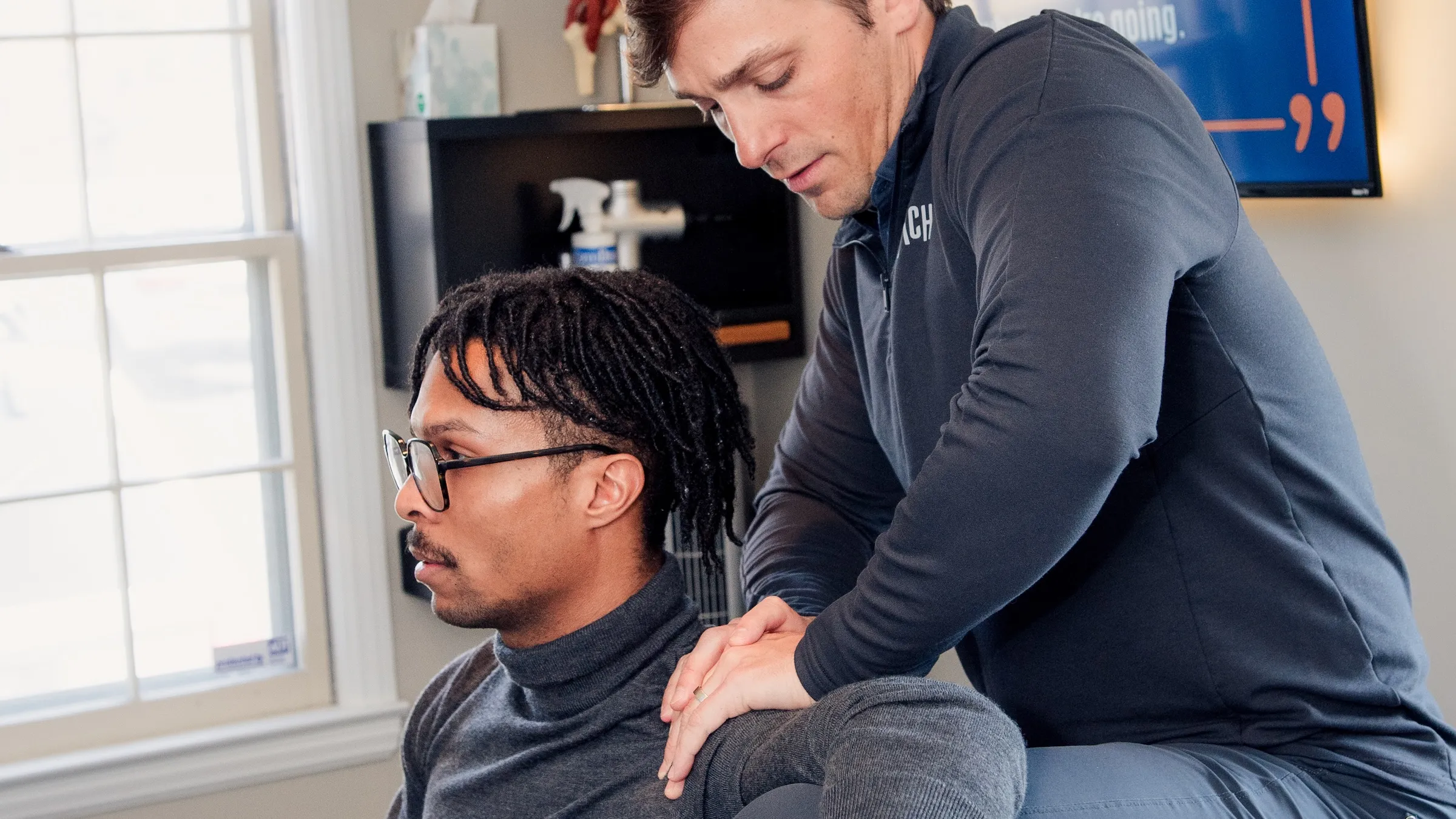
Massage, soft tissue work, adjustments, cupping. They can all make you feel better. The problem is when feeling better for a day becomes the entire strategy.
Then you’re right back on the revolving door.
Feel tight. Get worked on. Feel better. Tighten up again. Come back.
That’s not much different from getting adjusted three times a week forever if nothing underneath it is changing.
We tend to use hands-on work more when it’s useful, often earlier in care when pain, sensitivity, or guarding is making it harder to move. As things improve, the emphasis should shift toward you doing more and us doing less.
That’s the point.
Do I Book This Separately?
Nope. There’s no à la carte menu here.
Everyone starts with a new patient appointment. After that, you book a normal follow-up.
What happens during that visit depends on what we found, how you’re progressing, and what you need that day.
A typical visit might include a quick conversation about what’s changed, what you’re feeling, and whether you actually did the homework. Then we may use hands-on treatment, joint mobilization or manipulation, and exercise before adjusting your home plan and sending you back into the wild.
You’re not booking a technique.
You’re booking the plan.
Does It Hurt, and Will I Be Sore?
Some techniques can be uncomfortable.
Most patients call it “hurting good.”
We’re looking for the Goldilocks zone: enough input to be useful, but not so much that you’re gripping the table and reconsidering your life choices.
How much pressure we use depends on the area, how sensitive it is, what we’re trying to accomplish, and what you tolerate that day. Some techniques aren’t uncomfortable at all.
You may feel a little sore afterward. Cupping and instrument-assisted work can also leave temporary redness or marks.
What we’re not trying to do is make you look like you lost a bar fight.
You’ve probably seen those pictures online where someone’s entire back is purple after scraping or cupping. More bruising doesn’t mean more effective treatment.
Your treatment shouldn’t need an impressive Instagram photo to prove that something happened.
Is There Anyone Who Shouldn't Have It?
There are situations where certain hands-on techniques aren’t appropriate.
That’s why we don’t automatically scrape, cup, massage, or manipulate everybody who walks through the door.
If an area is highly irritated or sensitive, we may go lighter, use a different technique, or leave it alone altogether. Medical history, medications, skin integrity, recent injury, and other factors can also change what makes sense.
The technique should fit the person, not the other way around.
And pressure is adjusted by your feedback, not by a protocol.
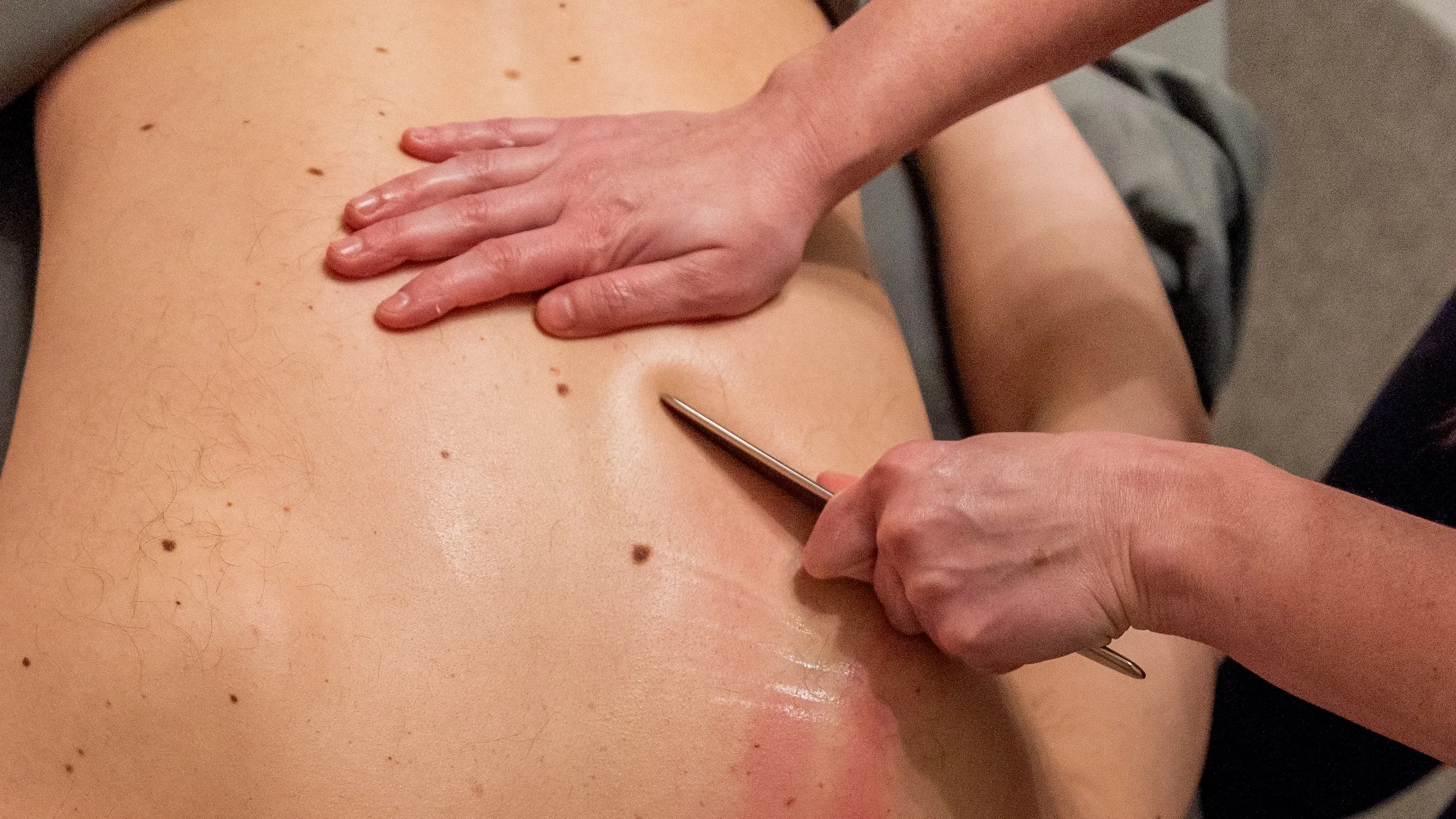
Instrument-Assisted Soft Tissue Mobilization
This is the one with the metal tools and lotion.
We can work lightly or more firmly depending on what we’re trying to accomplish. The goal is generally to decrease sensitivity or muscle tone and make movement more comfortable.
You’ll sometimes hear people say these tools are “breaking up scar tissue.”
They’re not.
We don’t need to pretend we’re chiseling adhesions out of your body to explain why treatment can still be useful.
Nerve Flossing
Nerves need to tolerate movement too.
When a nerve becomes irritated or sensitive, certain combinations of movement can reproduce pulling, tingling, burning, or pain.
Nerve flossing uses coordinated movements of your spine and limbs to gently load and unload the nervous system.
Think flossing, not stretching the nerve as hard as possible.
The goal is to improve how comfortably the nerve tolerates movement, not yank it into submission.
Cupping
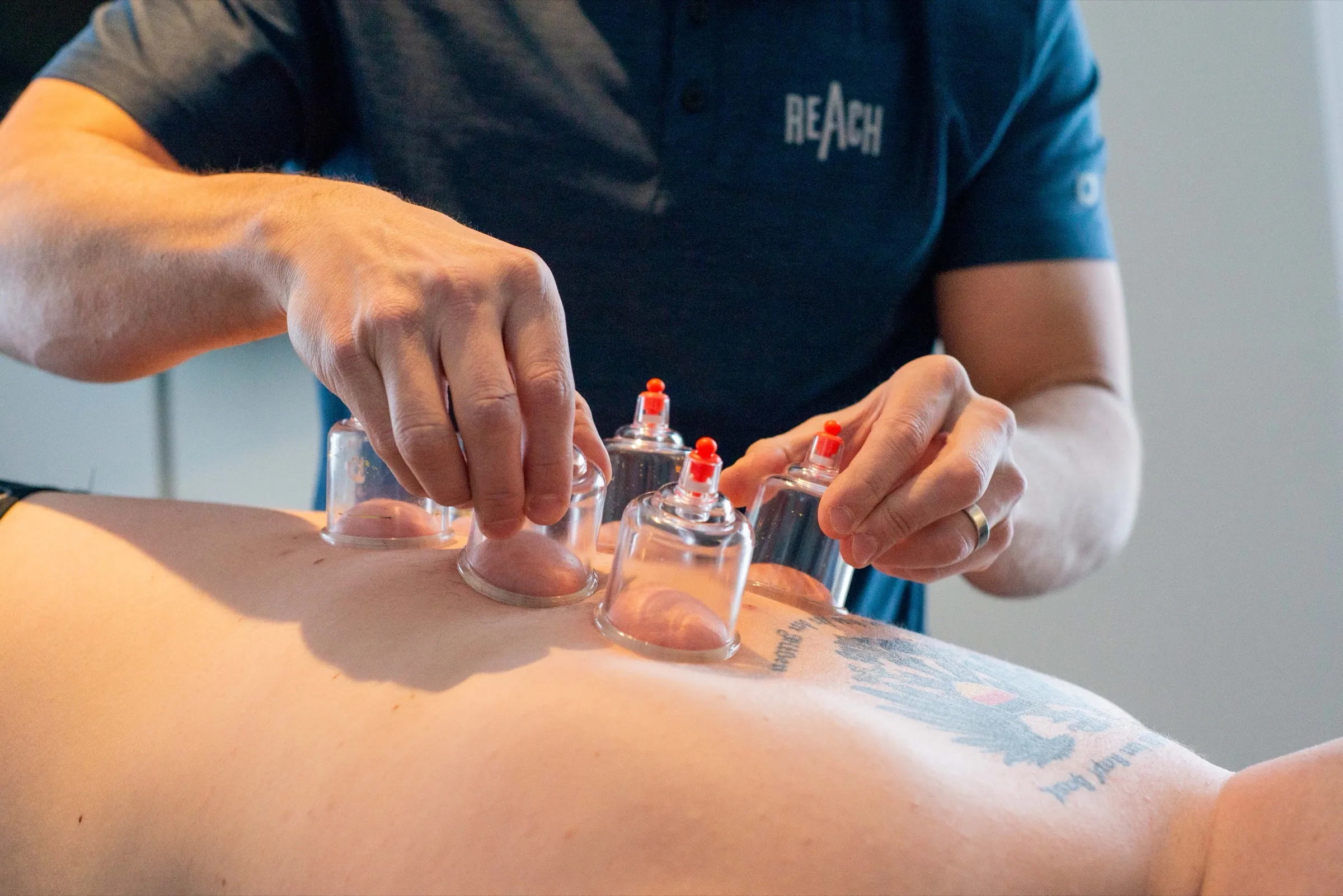
Most hands-on techniques push into the body.
Cupping pulls away from it.
The cups create suction over the skin and superficial tissues, and we can use them while you’re still or combine them with movement.
Some people simply respond better to that sensation than direct pressure, so it’s another tool we can choose when it makes sense.
Again: tool, not treatment philosophy.
Active Release Techniques
This is probably the soft tissue technique we use most, and there’s enough to say about it that it gets its own page.
How Long Before It Does Something?
Sometimes you’ll notice a change during the first visit.
But that’s not really the question we’re interested in.
The better question is: does it hold?
If we’re driving from Michigan to Florida, we’re making progress long before we see a palm tree. That doesn’t mean we should expect to arrive two hours after leaving Plymouth.
Hands-on treatment can help move things in the right direction. But what happens between visits matters too.
That’s why we pair treatment with movement, exercise, changes to whatever keeps irritating the area, and a home plan you can actually follow.
The goal isn’t to make you really good at receiving treatment.
It’s to get you to the point where you need less of it.
Ready to get started at REACH?
5.0★ rated by 450+ patients across Plymouth and metro Detroit. Booking online is the fastest way in — or call/text (734) 335-0212.
Book Your First Visit →