Rehab and Performance Are the Same Thing
They look different from across the room. One person is on the floor with a band and a ball. The other is pulling weight off a rack.
But they’re really different settings on the same dial.
Movement. Strength. Balance. Control. Capacity.
Rehab is that dial turned down to meet someone where they are right now. Performance is what happens as we gradually turn it back up.
That matters because we see the same pattern all the time: too much, too soon, after doing too little for too long.
You haven’t trained in six months and try to pick up where you left off. Your knee finally stops hurting and you immediately go back to your old running mileage. Life gets busy, your activity drops, and then one ambitious Saturday in the yard reminds you of it.
The job is to start you where you actually are, not where you used to be, and then turn the dial up at a pace your body can handle.
Usually a little slower than you’d like.
This Isn't Just for Athletes
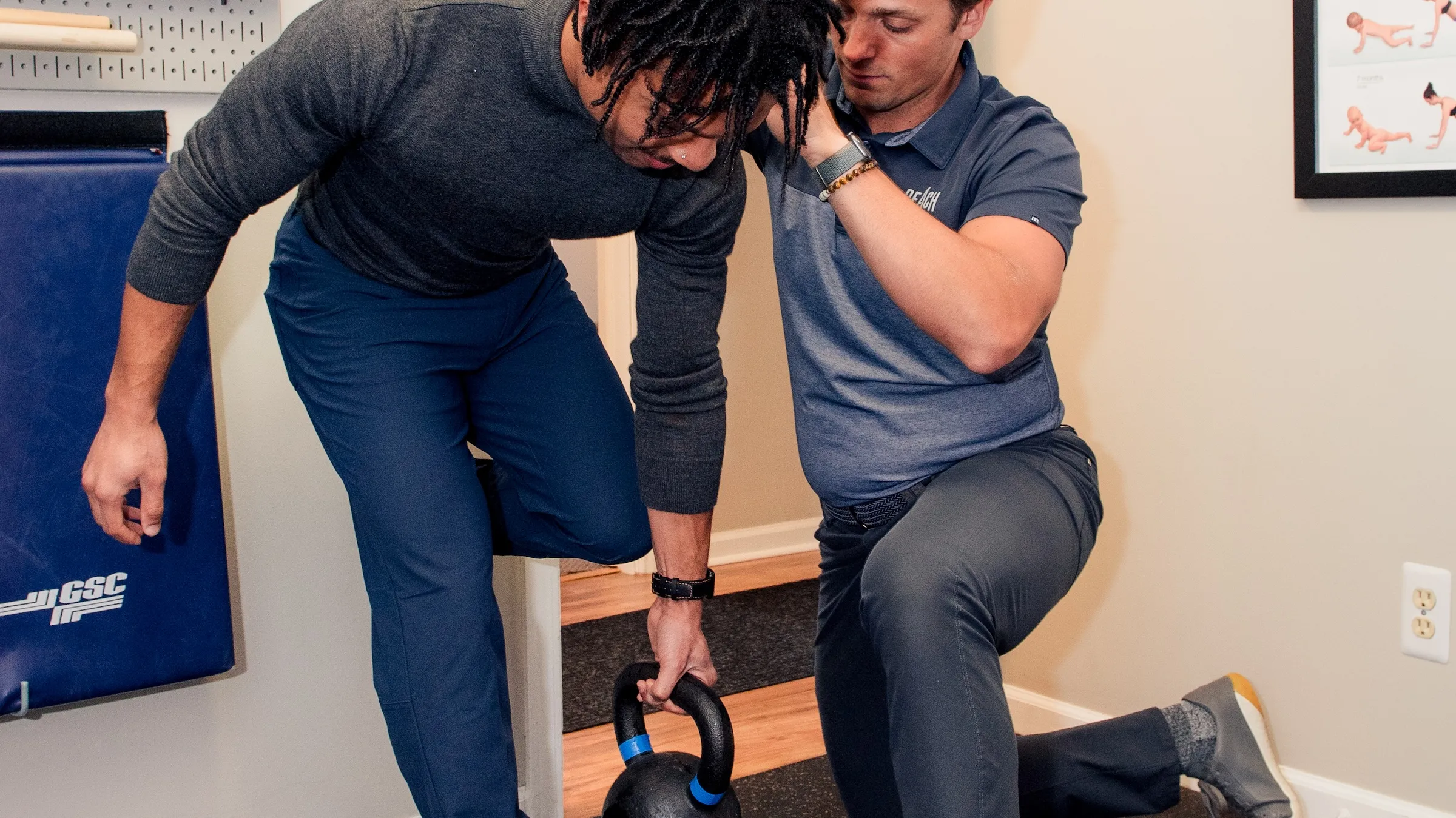
One of our patients is seventy-five. She came in struggling to squat down for a laundry basket and afraid to lift anything over ten pounds.
We built her up gradually and eventually stopped telling her how much weight she was using because the number was making her nervous. By the end, she was box squatting a 53-pound kettlebell. She thought it was about twenty.
That’s who this is for. Anyone who’s lost something they want back.
For one person, that might mean getting off the floor easily or being able to handle a vacation with a lot of walking. For someone else, it’s getting back to running, playing a sport, or pulling 500 pounds off the floor.
The number doesn’t matter nearly as much as whether your body can currently handle what you’re asking it to do.
We Don't Guess, We Assess
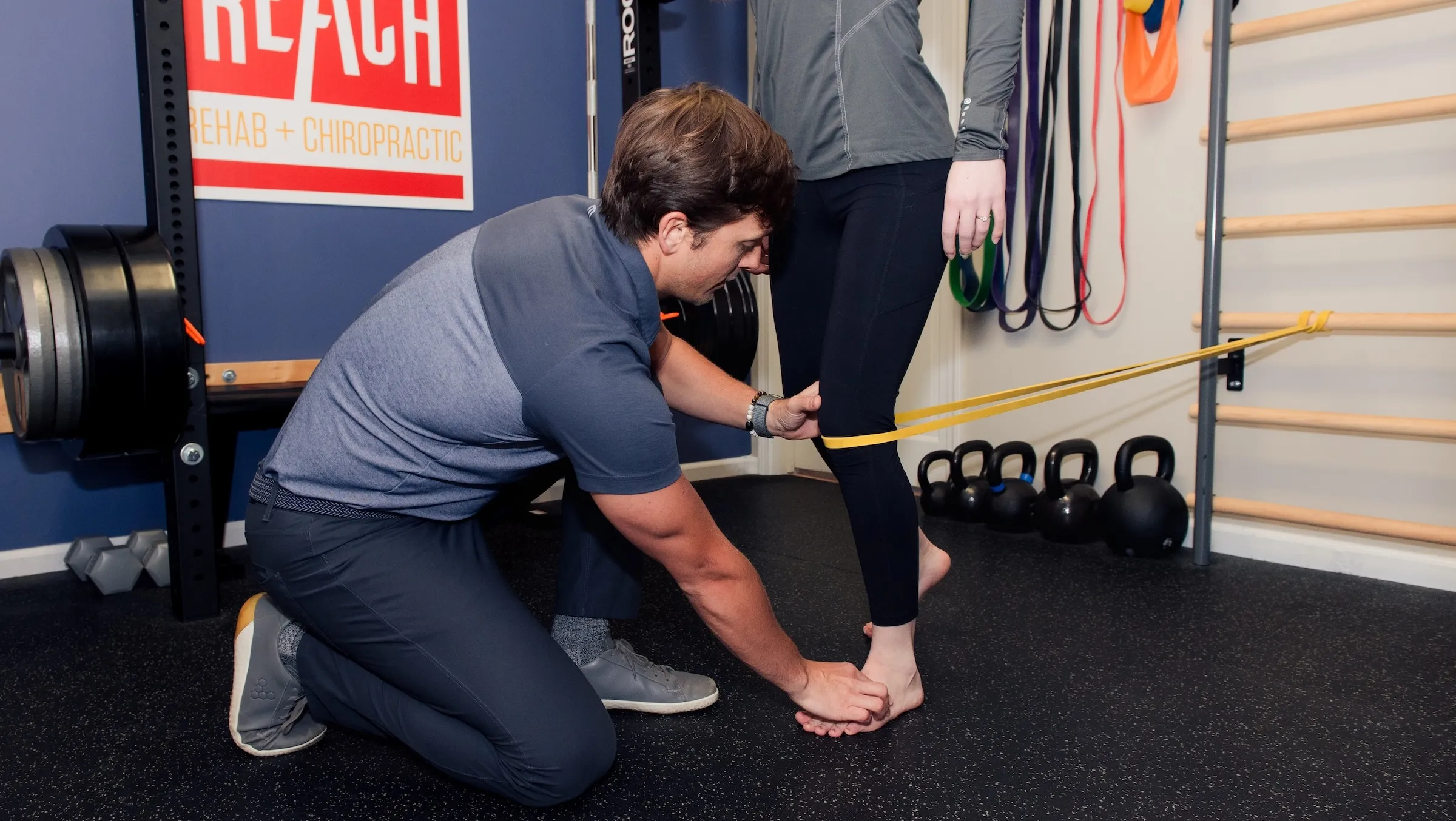
Before deciding what you need to work on, we want to see what actually shows up when you move.
We use full-body movement and strength assessments, including the DNS Strength Assessment, which Dr. Burr is certified in (DNS-SC). For golfers, Dr. Burr is also Titleist Performance Institute (TPI) Medical Level 3 certified, which allows us to look more specifically at how physical limitations may relate to the demands of the golf swing.
No single movement test tells us everything. What gets more interesting is when the same finding keeps showing up across different tests, matches what you’re experiencing, or changes when we modify a movement.
For example, the same side might repeatedly lose stability. A strength difference might line up with what you’re noticing during your sport. Or changing one movement may immediately change the symptom we’re trying to understand.
Now we have something useful.
That’s very different from finding twelve tiny imperfections and handing you twelve corrective exercises. Everybody has things we could pick apart if we looked hard enough.
We’d rather identify the few findings that actually seem relevant to your problem, work on those, and see what changes.
Minimum effective dose. Fewer things, done properly.
The Tonal
A Tonal is a wall-mounted digital resistance machine. Most of them live in people’s basements. Ours lives in the clinic.
One of the reasons we like it there is that it gives us something our eyes and your symptoms can’t always give us: numbers.
Tonal can measure power during your reps. That becomes especially useful with someone who says, “The pain is basically gone, but that leg still feels weaker.” Or slower, less stable, or just off.
Sometimes the numbers show exactly what they’re feeling. We can compare left to right, establish where you are now, and then come back to the same measurement later.
Test. Treat. Retest.
If your power improves or the difference between sides starts closing, we’re not just telling you that you look stronger. We measured it.
The rest of the machine is genuinely useful too. Resistance changes in one-pound increments, so we can progress gradually. We can change how much resistance you get during different parts of the movement, and it records your workouts and tracks them over time in your own app.
If you have a Tonal at home, even better. We can build your program around equipment you actually have so the work follows you out of the clinic.
And a Rack, Because Some People Need One
We see people whose goal is picking up a laundry basket and people whose goal is pulling 500 pounds off the floor. The second group eventually needs real weight.
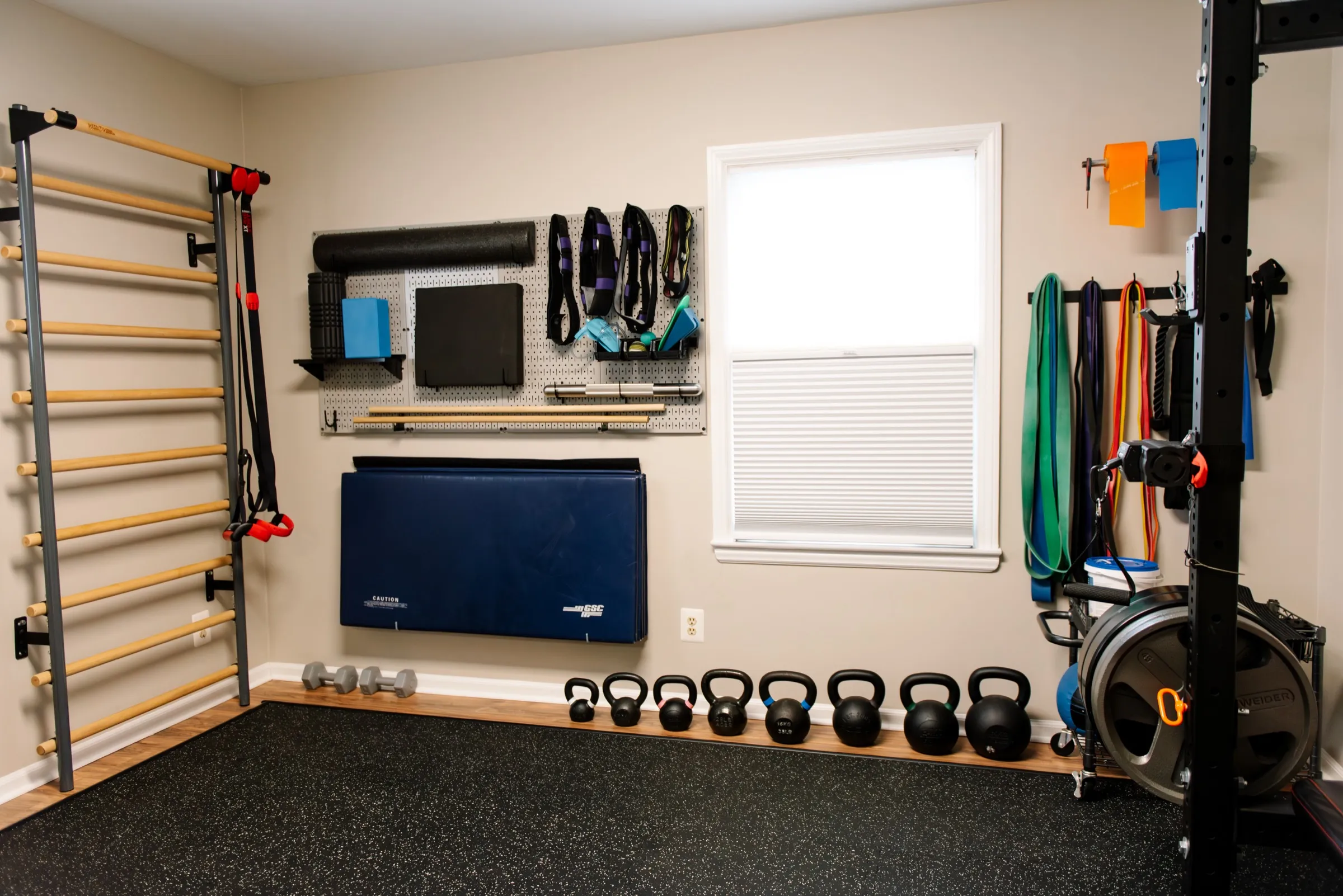
So yes, there’s a rack. Barbell. Plates. Pull-up bar. Band attachments.
Tonal has made the rack less essential than it used to be. But sometimes the only way to know how someone moves under meaningful load is to put them under meaningful load.
If your problem only shows up when the bar gets heavy, testing you with a resistance band isn’t going to tell us much.
How It Fits Into Your Visits
Nobody trains here on a membership. The gym is part of your care when it needs to be, just like everything else.
No à la carte menu.
Some visits go into the gym. Some don’t. Early on, when you’re sore, sensitive, or guarded, we may spend more time assessing the problem, using hands-on treatment, and finding movements you can tolerate.
As things improve, the conversation changes from “How do we get this to calm down?” to “How do we make sure you’re ready for what you want to do?”
That’s when we tend to spend more time building strength, capacity, and confidence under load.
Eventually, the conversation becomes about what you should be doing without us. Then we teach you how to do it properly, whether it’s your first time under a bar or your fifteenth year.
Because rehab isn’t finished just because the pain stopped.
It’s finished when you’re ready for the thing you came here to get back to.
Ready to get started at REACH?
5.0★ rated by 450+ patients across Plymouth and metro Detroit. Booking online is the fastest way in — or call/text (734) 335-0212.
Book Your First Visit →