What It Actually Is
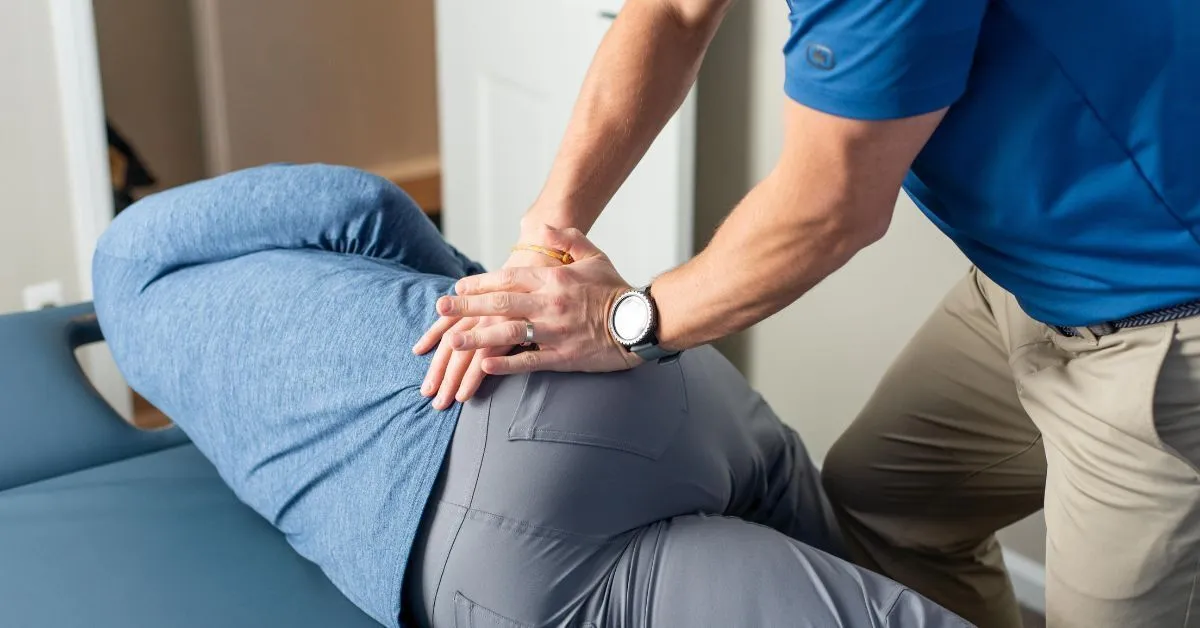
ART is basically a pin-and-stretch technique.
The clinician identifies the specific muscle or tissue they want to work on, applies pressure with a thumb or finger to create tension, and then takes it through its range of motion while maintaining that pressure.
No tools. No lotion. No machine.
Most areas only take a handful of passes.
What It's Doing, and What It Isn't
You’ll often hear ART described as “breaking up scar tissue and adhesions.”
That’s the traditional explanation. It’s even part of how the technique has historically been taught.
Dr. Burr doesn’t think that’s the best explanation for what’s actually happening, and he’ll say that as someone who’s full-body certified in ART.
You aren’t breaking up scar tissue with a thumb.
What ART can often do is decrease sensitivity and muscle tone, make movement more comfortable, and change how an irritated area responds to load or motion.
When nerves are involved, ART can also be used around the muscles and tissues along the nerve’s path to see if changing tension in those areas changes the symptoms.
That’s the part that matters.
The technique can be useful even if the old explanation for why it works isn’t.
What We Use It For
At REACH, ART is most often used for muscle and movement-related problems involving the neck, shoulder, back, hip, knee, and foot.
It’s especially useful when someone’s pain changes with movement and the clinician can identify a specific area that seems to be contributing to the problem.
That includes some cases of neck pain with symptoms traveling into the arm, or low back pain with symptoms traveling into the leg.
But we don’t assume a tight muscle is “trapping” the nerve just because that’s where you’re tender.
We test it.
If treating that area changes your motion, strength, sensitivity, or familiar symptoms, that’s useful information. If it doesn’t, we keep looking.
ART can also be useful for athletes who are training hard and feel beat up without necessarily being injured. Sometimes you don’t need to shut everything down. You just need to get an irritated area moving comfortably again and make sure there’s not a bigger problem underneath it.
There's No ART Appointment
ART is a tool, not a service.
It happens inside a normal visit alongside whatever else makes sense for your plan.
How much we use depends on how your body responds.
Test. Treat. Retest.
If a few passes on a specific muscle change what we found on the original test, great. That tells us something.
If nothing changes, we’re not going to spend another 15 minutes digging into the same spot just because that’s the technique we decided to use that day.
We move to another area, another possible source, or another technique entirely.
The response drives the treatment. We’re not guessing and hoping.
What a Session Feels Like
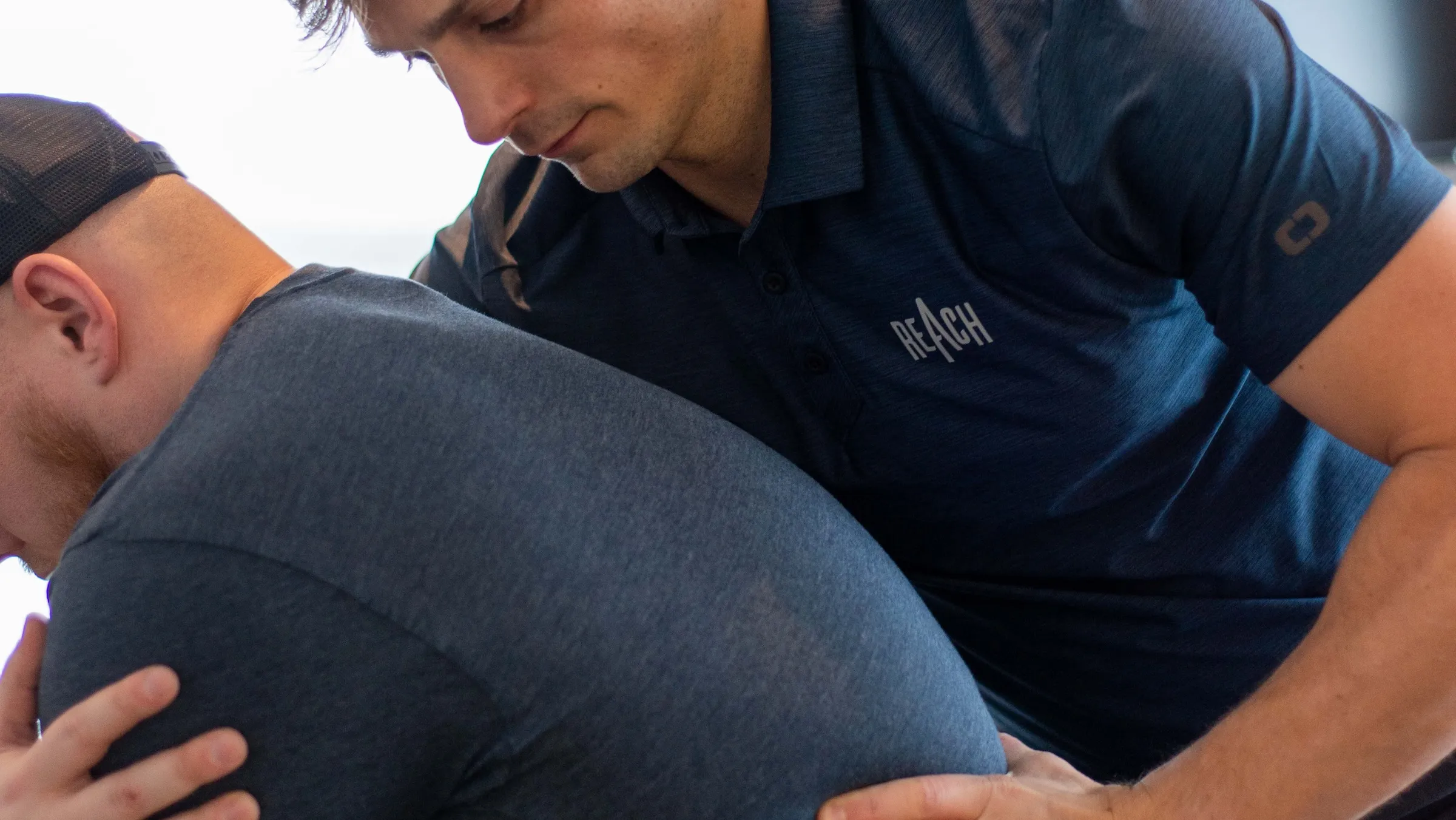
The “active” part of Active Release is you.
You move while the clinician maintains pressure on the area being treated. Depending on the muscle, you might be bending and straightening your knee, moving your shoulder, turning your head, or taking another joint through its range.
It isn’t a workout.
But you don’t just lie there either.
It's Not Massage
Massage and ART are different approaches, although there can absolutely be overlap. Some massage therapists are trained in ART and incorporate it into their sessions.
Traditional massage may work across a larger region, use a variety of techniques, and can have goals ranging from relaxation and recovery to addressing specific areas of tension or discomfort. It’s useful, and we offer it at REACH.
ART has a more defined technique and process. The clinician applies tension to a specific tissue while you actively move through a particular range of motion.
At REACH, it’s usually used in short doses inside a larger treatment session.
Specific area. A few passes. Retest. See what changed.
That doesn’t make ART better than massage. They’re different tools with different uses.
Which one makes sense depends on what you’re trying to accomplish.
What If It Doesn't Work?
Then we try something else.
That’s one of the reasons ART is a tool inside the plan instead of the plan itself.
If it changes something, we use that information. If it doesn’t, we don’t keep doing it just because we’re good at it.
Dr. Burr has a saying he uses with patients:
“I can help everyone. But I can’t help everyone directly.”
Meaning, if you’re not making the progress we’d expect or your body isn’t responding the way we thought it would, helping you might mean recognizing that you need something different.
Sometimes that’s imaging. Sometimes it’s another type of workup. Sometimes it’s referring you to a clinician who has a tool, specialty, or procedure that we don’t.
That’s still helping.
Sometimes the best thing we can do is recognize when the answer isn’t at REACH and help get you to the right place.

Why Dr. Burr Got Certified
There’s a difference between knowing what ART looks like and actually knowing how to perform it well.
A lot of that comes down to touch. Knowing what you’re feeling for, where to apply pressure, how much tension to use, and how to coordinate that with the movement.
That’s hard to learn from watching somebody else do it on a video.
Dr. Burr started with the upper-extremity course because he wanted to learn that feel properly. He then added lower extremity and spine and eventually became full-body certified.
The certification isn’t the reason he uses ART.
He uses it because when the right problem is in front of him, it’s a useful tool to have.
Ready to get started at REACH?
5.0★ rated by 450+ patients across Plymouth and metro Detroit. Booking online is the fastest way in — or call/text (734) 335-0212.
Book Your First Visit →