We're Not Cracking Your Baby
This is usually the part parents are nervous about, so let’s clear it up first.
An infant visit looks nothing like an adult chiropractic visit. There are no big movements, twisting, or the kind of “cracking” people picture when they think of chiropractic care.
A lot of the visit is actually pretty simple: we watch how your baby moves.
What We Look For in Infants
How is your baby moving through their developmental milestones? Are they sitting, rolling, crawling, pulling themselves up, or beginning to walk as expected? Are they using both sides similarly, or does one side seem to do most of the work?
Sometimes it’s subtle. One leg consistently lags behind. They always roll the same direction. They scoot instead of crawling. They struggle to push themselves up.
Those little details give us information.
We can also look at age-appropriate primitive reflexes and how your baby coordinates movement as a whole. We use principles from Dynamic Neuromuscular Stabilization (DNS), a developmental movement approach that looks at how babies naturally learn to stabilize, roll, sit, crawl, and eventually stand and walk.
In other words, we’re not just checking whether your baby hit a milestone. We’re looking at how they got there.
We’re not trying to find something “wrong” with every baby. Most babies develop beautifully without needing us.
The point is to notice when something looks different, decide whether it actually matters, and help parents understand the right next step. Sometimes that’s something we can work on. Sometimes it’s simply something to watch. And sometimes the right answer is involving their pediatrician or another specialist.
Kids and Young Athletes
As kids get older, the questions change.
Now we’re looking at things like: Why does this hurt? What does their sport ask their body to do? And do they currently have the mobility, strength, and control to handle it?
A growing athlete who sits in school all day and then goes straight into hours of gymnastics, hockey, soccer, dance, or baseball has a very different set of demands than an adult.
So we don’t hand every kid with knee pain the same three exercises.
We look at how they move, what their sport requires, where they’re struggling, and then build the rehab around what we find.
Pregnancy
Pregnancy changes your body quickly, and sometimes your muscles and joints aren’t exactly thrilled about the renovation.
Your center of gravity shifts. Your ribs and abdomen have to make room. The way you stand, walk, sleep, and move changes. Back and pelvic pain can show up earlier than many women expect. Rib discomfort, carpal tunnel symptoms, and pubic or pelvic pain can also become part of the picture.
And yes, you’re tired. Your body has a lot going on.
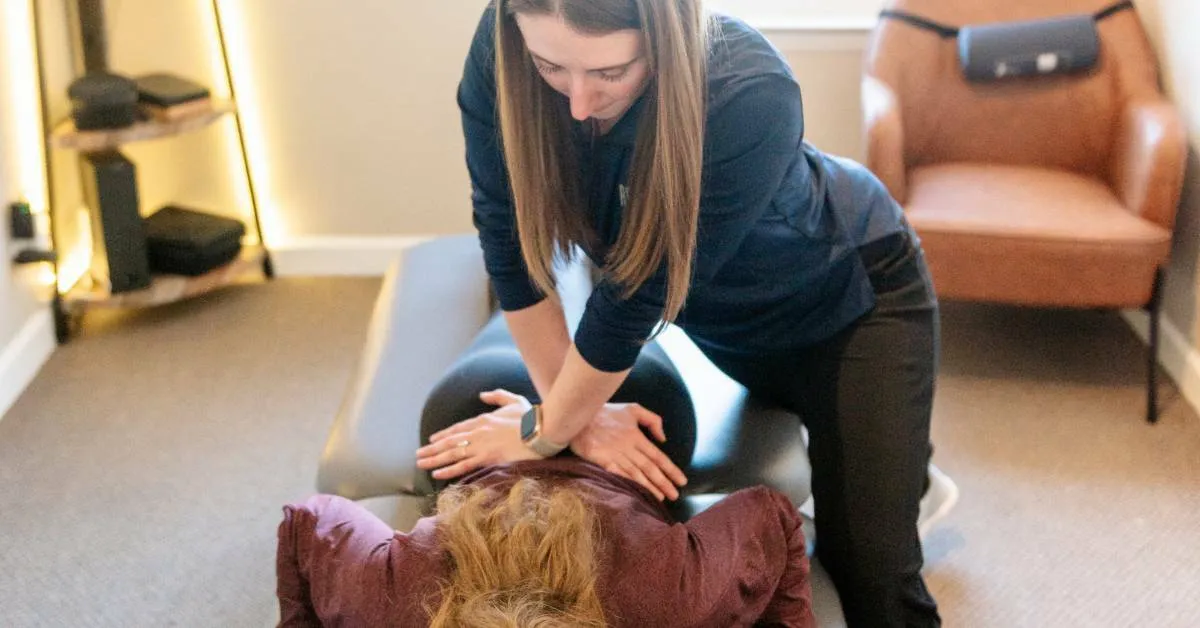
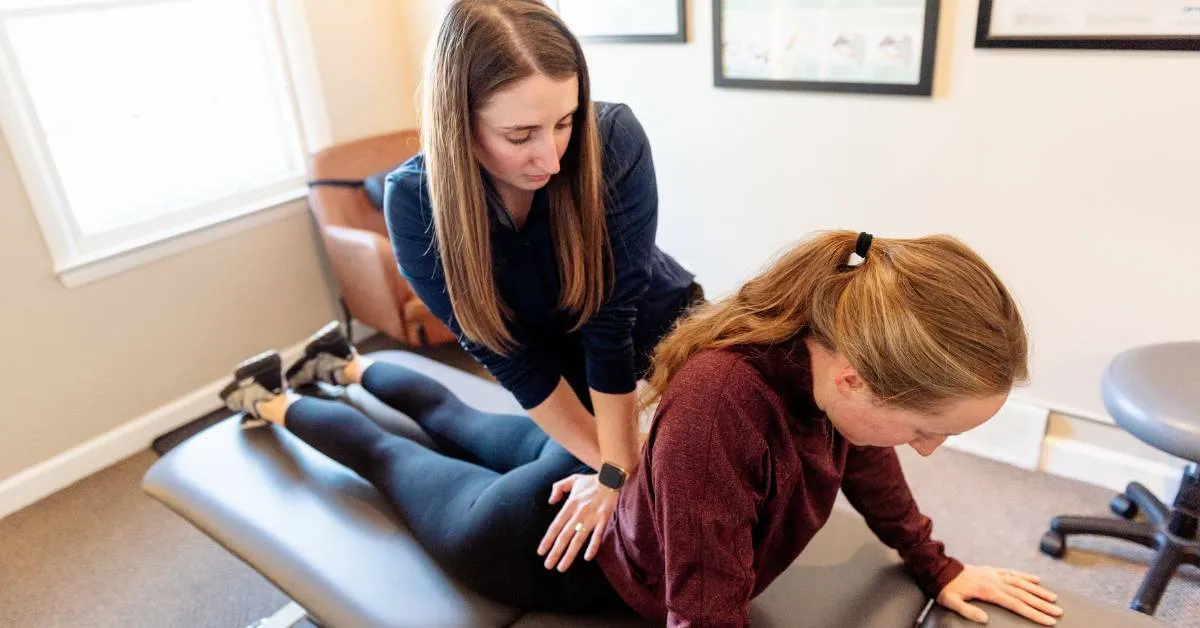
Early in pregnancy, treatment may look fairly similar to what we’d normally do. As your belly grows, we adapt with you. We can use pillows and positioning to keep you comfortable, limit prolonged time flat on your back, and choose gentler hands-on techniques that make sense for that stage of pregnancy.
You shouldn’t have to fit the treatment. The treatment should fit you.
Webster Technique can be one part of that approach. It’s a gentle technique focused on assessing and addressing mobility and soft-tissue tension around the pelvis during pregnancy. Like everything else we do, it’s a tool, not the entire plan.
The goal is to help you move and feel as well as possible while your body does something pretty incredible.
Postpartum: What You Don't Have to Just Live With
Leaking when you cough, sneeze, run, or jump. Pain or sensitivity around a C-section scar. A core that doesn’t feel like it works the way it used to. Diastasis recti. Pelvic or low back pain that never really went away.
A lot of women quietly assume, “Well, I had a baby. I guess this is just my body now.”
Some things do improve naturally with time and healing. Others stick around much longer than they need to, especially when no one has actually assessed what’s happening or shown you how to rebuild.
Common after pregnancy doesn’t automatically mean something you have to accept forever.
That’s where we look at breathing, pressure management, core and pelvic stability, strength, and how all of it works together when you move.
And there isn’t some tiny window where you missed your chance.
Whether your baby was born six weeks ago or six years ago, we can assess where you are now and figure out what makes sense from here.
Related Reading
Four more articles go deeper on specific pregnancy and postpartum topics. Chiropractic Care for a Healthier Pregnancy and Better Comfort covers prenatal wellness in more detail, including the Webster Technique’s use for a baby in a breech position. Pregnant and Powerful is a guide to strength training safely during pregnancy. Stress Less, Feel Your Best looks at chiropractic care across every stage of a woman’s life. Chiropractic Solutions to Strengthen Your Core and Improve Pelvic Floor Health is Dr. Kent’s own deeper look at pelvic floor dysfunction, in pregnancy and beyond.
Ready to get started at REACH?
5.0★ rated by 450+ patients across Plymouth and metro Detroit. Booking online is the fastest way in — or call/text (734) 335-0212.
Book Your First Visit →